Interview
A conversation with S*an D. Henry-Smith
Photography and interview by Pemakit Lepcha
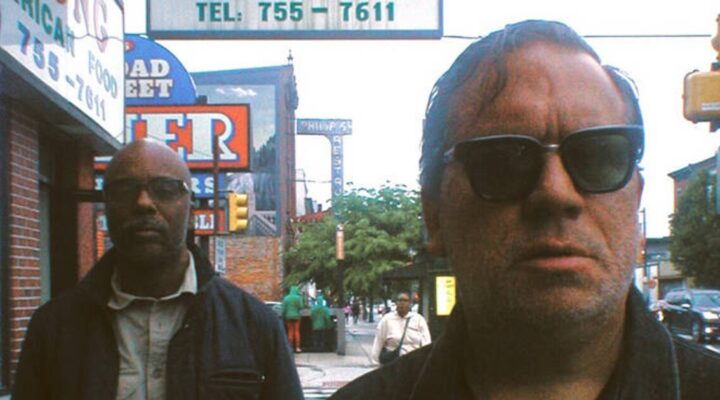
Currently completing a residency at the Rijksacademie in Amsterdam, we were lucky enough to be welcomed in S*an’s studio for an afternoon. Leading up to their performance on the 3rd of September at BIMHUIS, opening for Joanne Roberston, S*an spoke to us about their relationship to intuition, music and poetry, collaboration and more.
P: You work between a wide range of disciplines. Your practice includes photography, poetry, sound, publishing, and performance. How did it become so expansive?
S: I think there are a few answers. So much of art-making and creative life in a Black diasporic context is transdisciplinary. I’m also obsessed, at the moment, with the band and the film crew, interchangeably, but also as distinct forms. They’re kind of like a political unit. In the expression of time toward this goal—whether it’s an album, a song, or a film—there are unique roles that uphold each other. Perhaps there’s a hierarchy, but ideally it’s something that allows those roles to shift, while recognizing that nothing is possible without all of its parts being in relation. Which means that, sometimes that’s challenging, and it’s about working through that, as well. I hope to be in a band or a crew, which means that my role isn’t fixed, and whatever strength I can offer to that moment is what I’m occupying.
In terms of my own practice, I started singing in church when I was five. None of my family knew I could sing. I didn’t know I could sing. I just ended up doing it. My mom tells this story about me singing “Silent Christmas” one year and the church going crazy and asking me to sing it three times in a row. That’s my villain origin story. Then I was performing poems at key points during the year. I had an inclination toward oration, and that eventually turned into theatre at some point. As a teenager, I was interested in the things I didn’t have to do for school and falling in love with emo bands and math rock and trying to replicate that.
I’m interested in ways of bending and slowing time. Poetry, photography, performance, and publishing all do that in different ways.
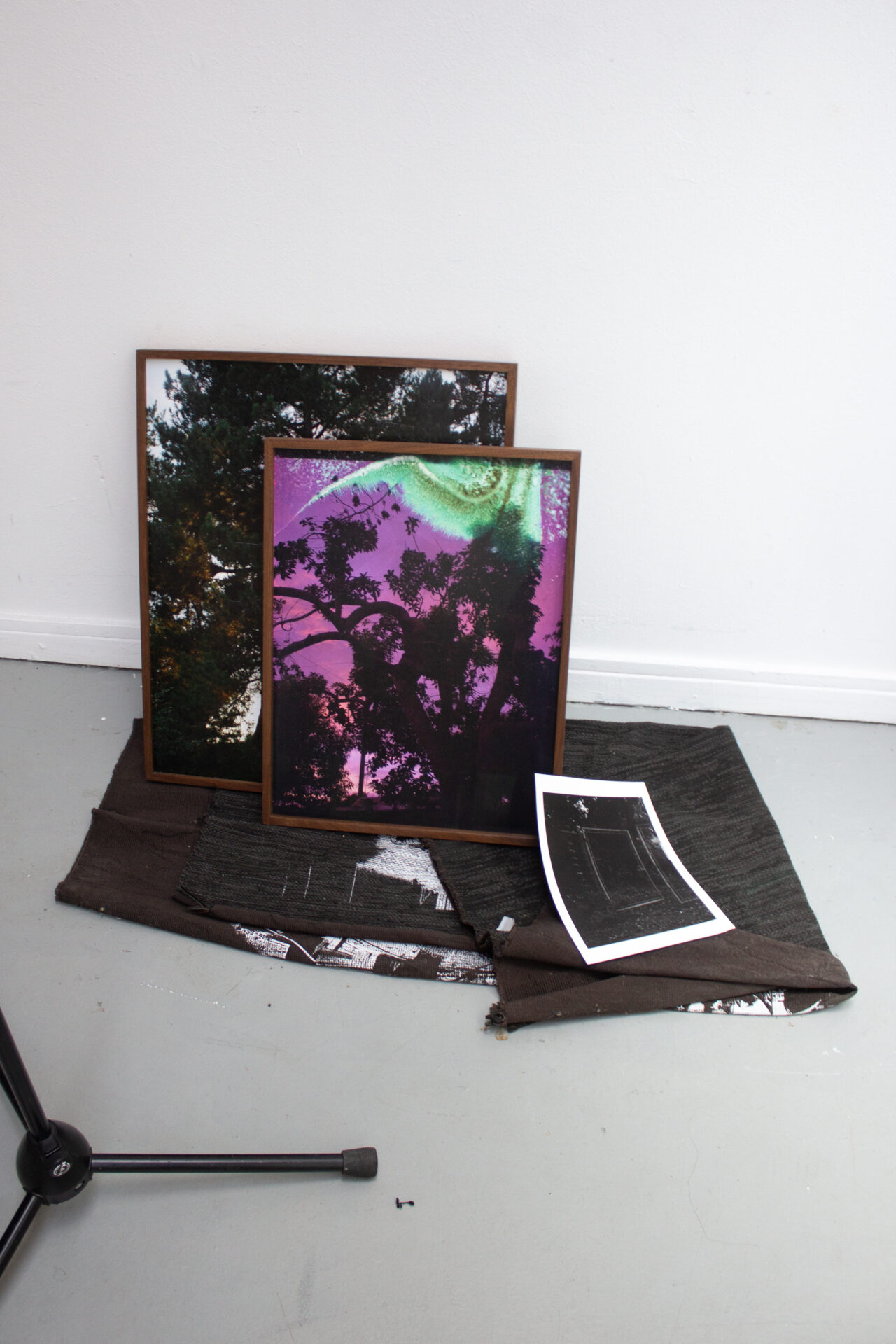
By the time I got to college, I thought I would study theatre. Basically, I took intro to photography as a prerequisite for intro to video and fell hard, just with actually the challenge and the wonder that it still presents me. I work almost exclusively with analogue, although that’s changing a little at the moment. Looking into a view camera, getting under the hood, seeing this inverted image of the world, experiencing a room turned into a camera obscura and thinking, Whoa, that’s what our eyes do? The way light is received still blows my mind. I think, if anything, I’m interested in ways of bending and slowing time. Poetry, photography, performance, and publishing all do that in different ways. They offer me a loop in which I can operate in different modes at different moments, and those modes can touch each other.
P: The whole thing about the camera really blew my mind, what if the world is actually upside down and our eyes just really see it like this? Like, that’s so wild.
S: Exactly. I think that sense of orientation-making, or framing, is essentially what the artist or writer is doing. It’s tapping into the way things maybe already are.
P: But then there’s the question: Are they?
S: Maybe I’m inclined to argue that they are, and that what we all generally experience is a more singular experience of reality, something enforced by Empire.
P: Yeah, through education, media, culture, and whoever controls those things.
I hope my practice in some ways activates or shakes up different possibilities, or remembers something that was, or recognizes something that is.
S: Fully that. I hope my practice in some ways activates or shakes up different possibilities, or remembers something that was, or recognizes something that is. I’ve done things intuitively in performances that people have later told me are quite specific gestures in other traditions. For instance, there’s a performance where I’m shaking dice throughout the reading of a poem. When I throw them, the numbers dictate how the poem continues to unfold. Someone came up to me afterwards and told me about a divination practice in Brazil that they’re familiar with. I’d never encountered it before, and I still need to do more research. But there was clearly some kind of embedded knowledge there.
Akilah Oliver, who was an incredible poet and performer, who is no longer with us, and remains truly one of my north stars, wrote about flesh memory. It’s this thing that you don’t know you know, but that you’re living in and through. Then there’s a moment when it becomes distilled or clear. Maybe I want to be in pursuit of, and in service of, flesh memory.
P: Would you say a lot of your practice is built around intuition?
S: Yeah, I think I learn on the job. I have to do it in order to know what I’m doing. I research, plan, and gather materials and experiences, but a lot of it comes through living. That informs the next steps, whatever those are. I have to get my hands dirty, too. I’m also quite obsessed with rehearsal. I think everything is in attempt, or in preparation, for a moment. Something like an exhibition or performance makes that moment something you can plan toward. But in daily life, things are just kind of happening. There’s the schedule, and then there’s the unforeseen. And I think the unforeseen is everything. I want to be in an encounter with the range of potential responses that can be. Sometimes for better, sometimes for worse.
P: So you’re preparing situations in which you can encounter different possibilities of what can happen.
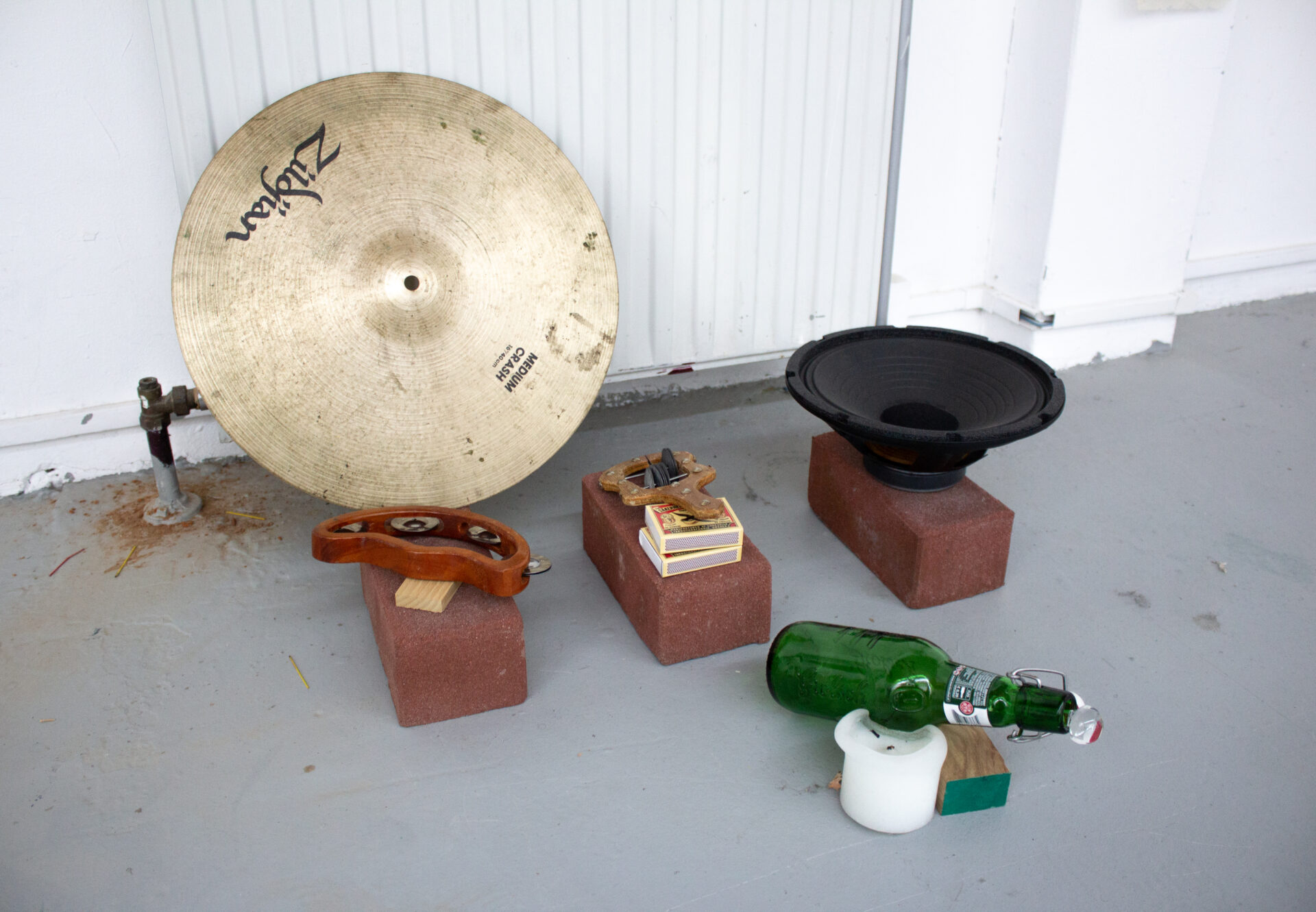
S: Yeah, in the beginning, with the gear when you walked in—I’ve had some of these pedals for almost twenty years now. I know that when I press this button, it does that particular thing. But what happens if I turn this knob? What happens when this goes into that instead of something else? Things keep changing, even with a simple recipe. I have to keep making a mess for myself to see what it can look like or what it can feel like.
I want to be in an encounter with the range of potential responses that can be. Sometimes for better, sometimes for worse.
P: Is that where experimentalism comes into your work?
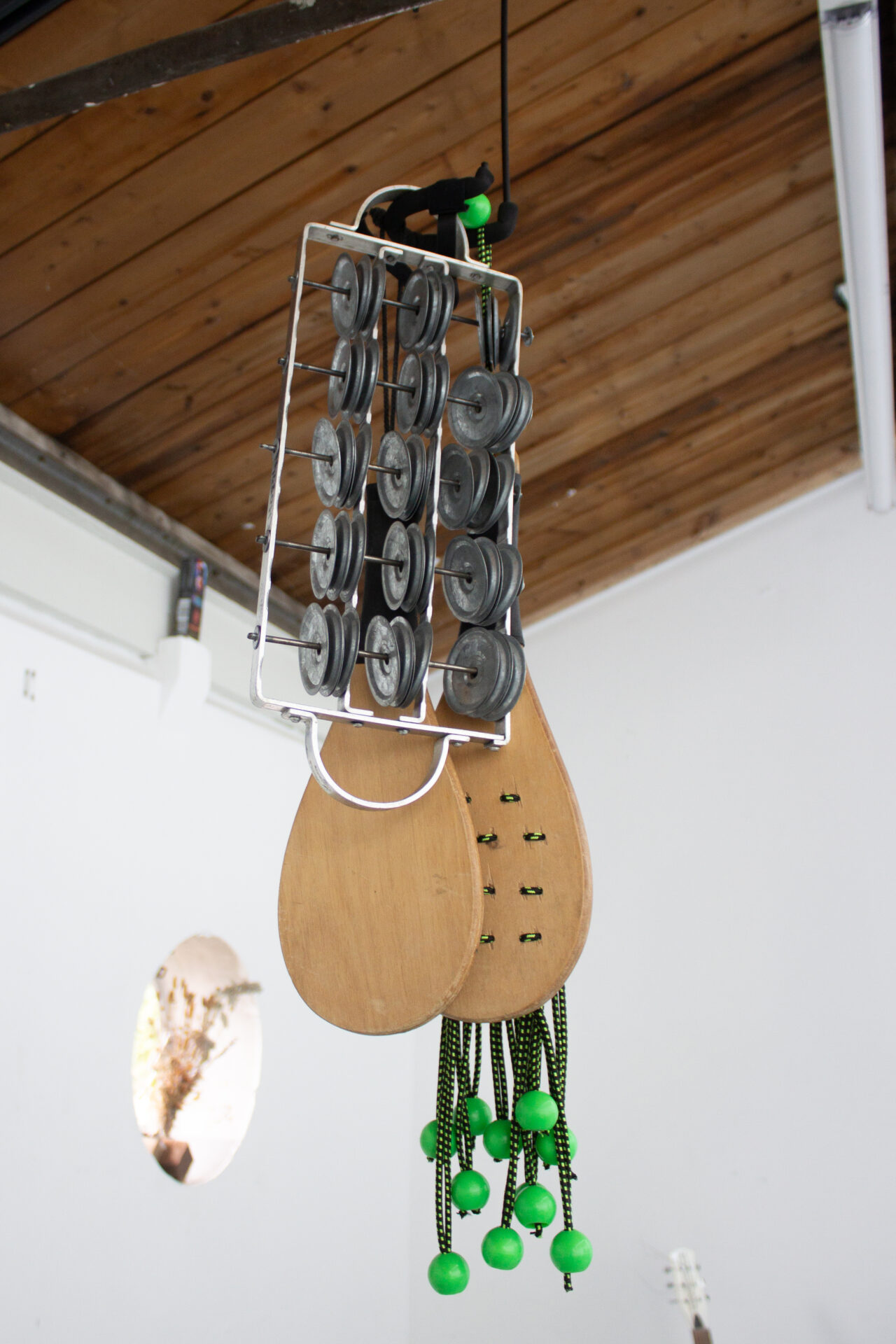
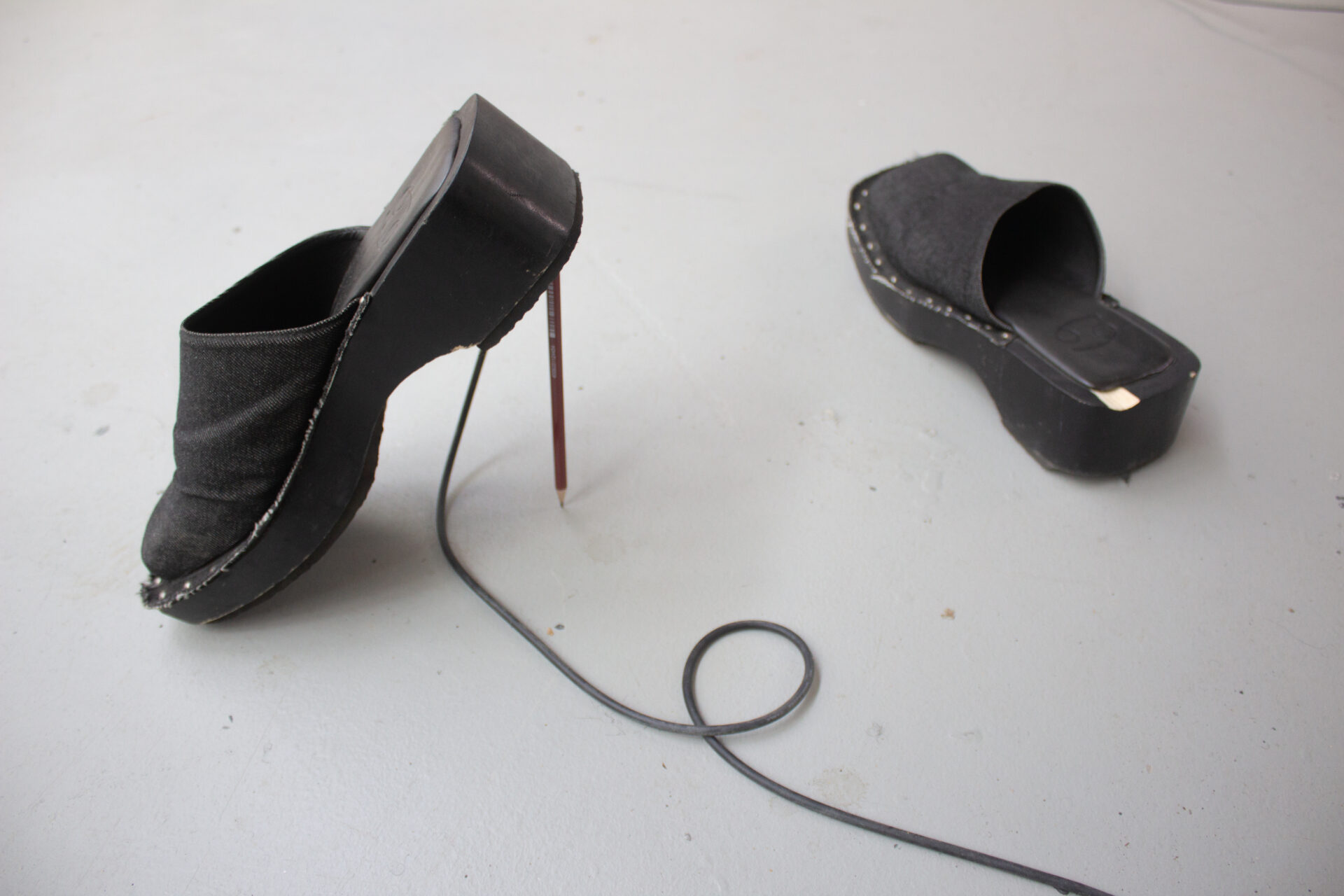
S: Sometimes there’s a prompt, like a question or curiosity I have that I approach. I often feel like I’m making problems for myself. It’s like, even the way that you’re encountering the studio today is just the way that it is today. We might leave the room, and I’ll come back, and suddenly be drawn to like this shaker on the floor. I might pick it up and it could trigger an entire set of steps I didn’t plan for yet. These clogs are a good example. One of them has a contact mic taped to it. I don’t remember exactly how I arrived at that, but I must have been putting the mic away at some point, while wearing the clogs. They’re heavy and hollow and have this woody sound. Through this amplifier, they become something else.
I’m also obsessed with this kind of Looney Tunes trap, the idea of a rabbit trap thing. I don’t know what it’s set up for, but it’s that at some point this might fall. Maybe it falls on its own. Maybe I bump into it. It’s about making a situation in which something can happen.
P: There’s a tension because the result is unknown. It could fall. It could stay there forever.
S: Exactly. Maybe it is just intuition. It’s organic for me. I feel most fulfilled when I can do this uninterrupted. I don’t necessarily think I’m like reinventing the wheel, but it is just nice to encounter how things touch and relate and sometimes repel. Learning from that and trying something else out.
P: Earlier, we were talking about the band as a political entity. Do you ever see yourself as the band? All these different parts of yourself working toward an outcome together?
S: That’s a really good question. My instinctive response is probably not, and I’m almost sad about that. Maybe it’s because I don’t necessarily see myself as “enough”, or as having “enough”. It’s not that I have a particular relationship to virtuosity, but I would like to be better at the things that I do. With the guitar, for example, I don’t necessarily want to become a shredder. It’s that every time I pick up the instrument, I can have an uninhibited and fully open response to it.
[Clogs & contact mic start making noises]
P: The spirit is in the room.
S: That’s all I want, to make room for the spirits to play. Sometimes I really do just come into the studio, turn things on, and wait to see what activates.
P: Maybe there’s a divination you’re not aware of yet that’s part of your practice.
There’s something about being a conduit and showing up to a moment, honestly. That can involve a whole range of expressions. Sometimes they’re lighter, and sometimes they’re heavier.
S: Yeah, I think there’s some familiarity. I don’t think it’s religious so to speak, but I do appreciate a certain liftedness in listening to and making sound, music, and in encountering art. And what I consider beautiful has a very large range. The other day I saw these paintings by Janiva Ellis that I found to be devastating, but the fact that she was able to access such a depth in herself and share it with us opens my heart right up. I think that’s what I’m in pursuit of. My friend Hannah Black once had a Twitter bio that said something like, “Just an errand boy for the spirits.” I think it’s something like that. I don’t know which spirits, but whichever ones need to talk, I’m here. There’s something about being a conduit and showing up to a moment, honestly. That can involve a whole range of expressions. Sometimes they’re lighter, and sometimes they’re heavier.
P: You collaborate a lot. You had a solo exhibition at Metro54 recently, but you decided to work with a lot of collaborators. What does collaboration mean in your practice? What place does it hold for you?
S: Sometimes it’s about being in service to someone else, or something else. Maybe all the time that’s what it’s about. And sometimes being in service to someone or something. It means you’re also leading it or in charge of it, somehow. When I’m collaborating with others, and perhaps especially when I’m at the helm in some way, I want to remind the people I’m working with to reach their depths. Earlier this year, I performed at Café OTO with dove, Christine Kirubi, who’s an amazing poet and artist, and Tavish Timothy, whom I’ve known since I was sixteen through Tumblr. Tavish is an amazing photographer and writer, and a really talented guitar player. We play together in another band called Black Boots, and the two of us also played together under another name, Twill.
When I’m collaborating with others, and perhaps especially when I’m at the helm in some way, I want to remind the people I’m working with to reach their depths.
P: I listened to that EP. I really loved it.
S: Thank you. Actually even that was like, Tavish had been sitting on recordings he’d be making for four or five years, and I kept telling him, “You just have to put something out.” The band became an excuse to put an EP out. And we’ve continued that way, we push each other toward fluidity. The Café OTO performance was similar. We only had a couple of days to rehearse together, and dove and Tavish were meeting for the first time. So I was asking them to extend the trust they had in me to each other. Then, also me asking them to be in a place of fearlessness in public. The poems, in a certain way, are doing something similar. I have to facilitate the poems towards them. And I need them to generate the space that the poems sit in. It’s a circuitous thing. I can’t do my part unless they’re doing theirs. We’re trying to conjure something together.
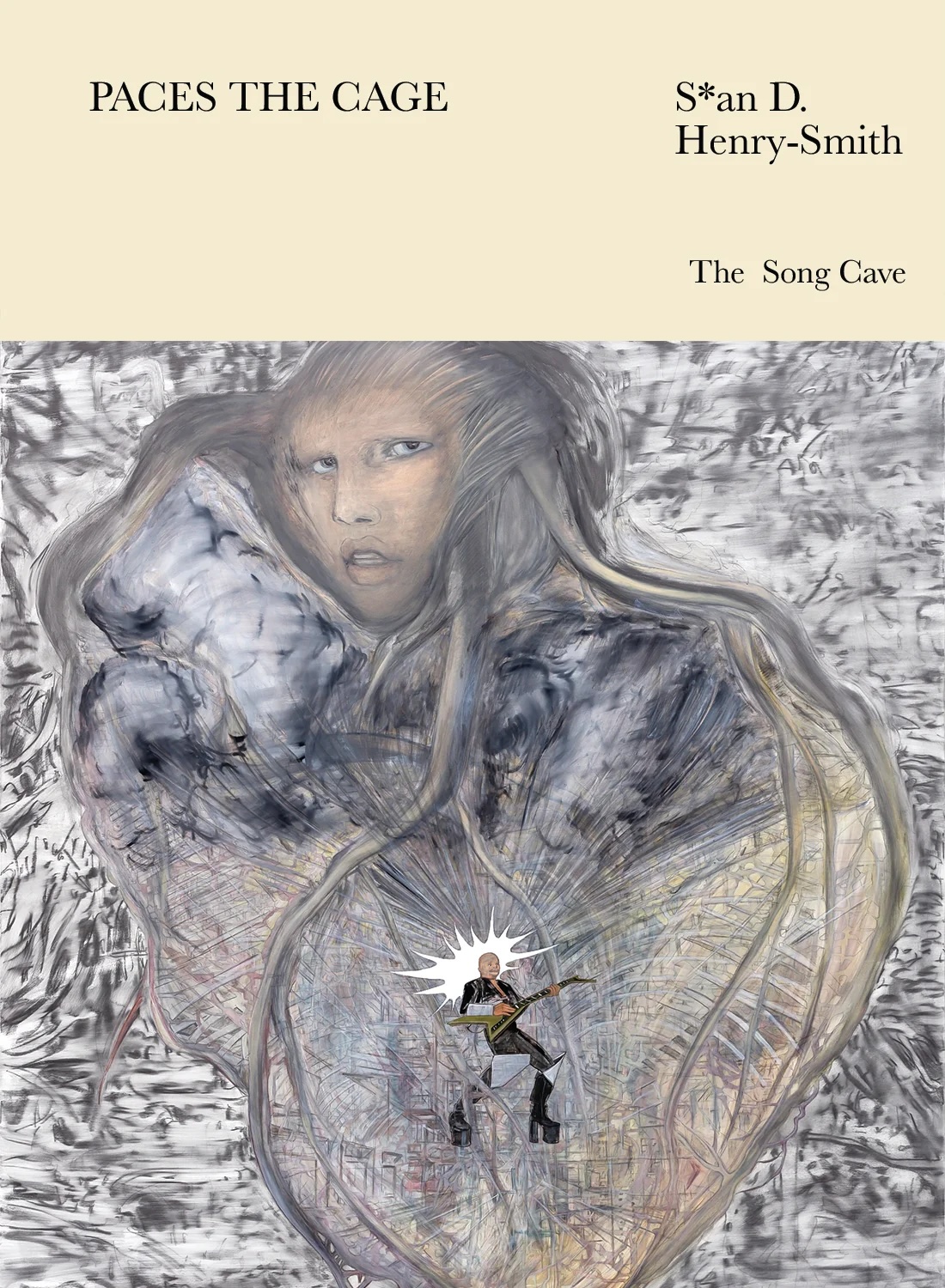
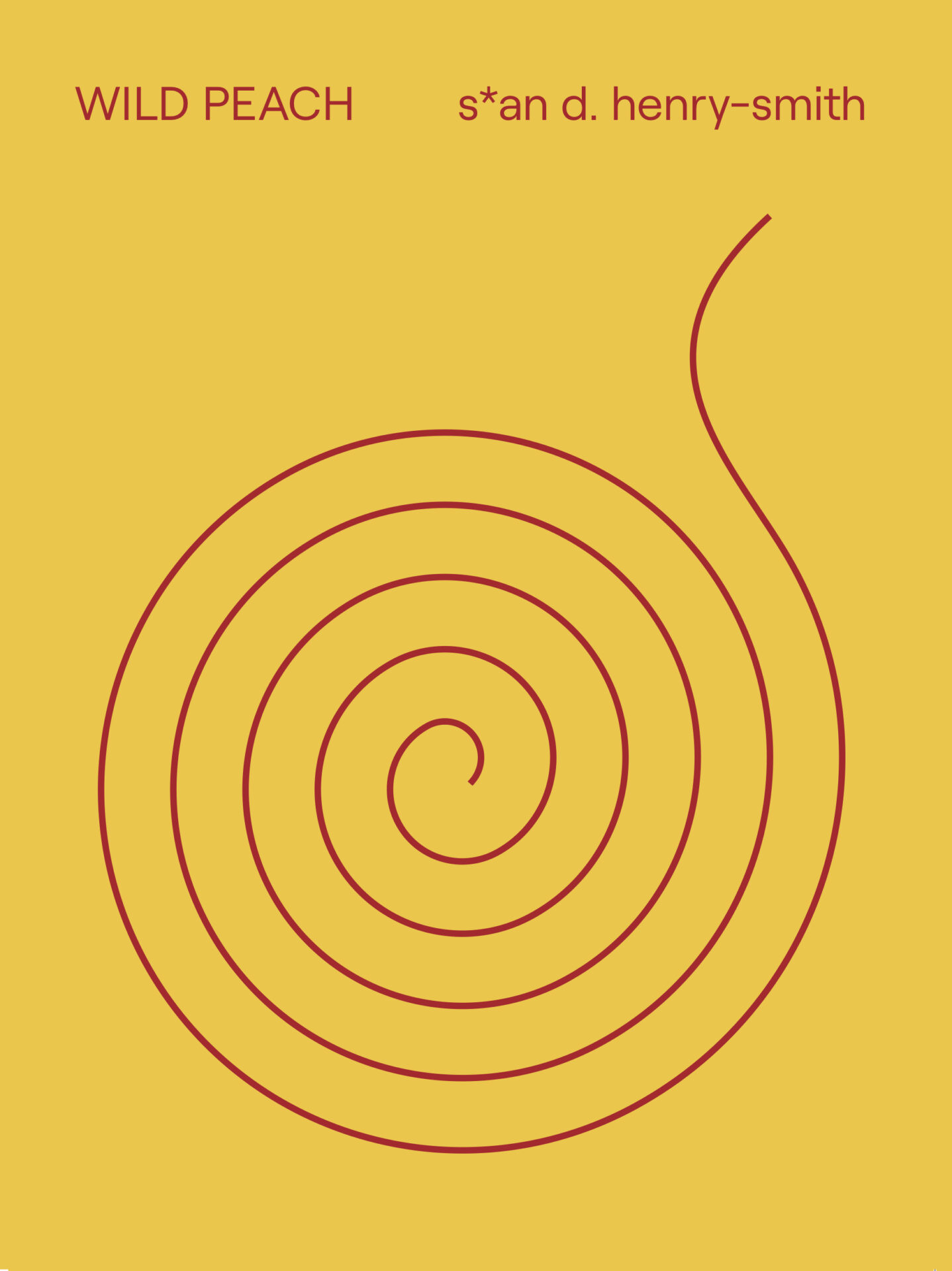
P: You wrote Wild Peach, which was published in 2020, and then PACES THE CAGE came several years later. How did your writing change between those?
S: Yeah, it’s funny actually. Wild Peach was finished in 2019, but then the pandemic happened, so it didn’t come out until 2020. PACES was originally going to be a chapbook, like a small collection. When I sent it to The Song Cave, who had invited me to make it, I thought, I don’t know how to edit this down. I think it wants to be longer. They told me I could take a year for it. In that time, I refined it into what it is now. Or rather, it grew into what it is now. Wild Peach was more of an accumulation. At some point I recognised that these poems made a book.
PACES THE CAGE was a bit like, there were things that were almost eight years old, things that were maybe not finished necessarily, but things that had begun around the time of Wild Peach and then matured into something else. The oldest of them are like that and the youngest of them truly were pushed into the book the week before I sent the manuscript off. Just having an encounter in the world and suddenly thinking, Oh, this is what I’ve been trying to say the whole time.
P: Do you think you’ve changed a lot as a poet during those years?
S: For sure. I think so, although some things are consistent. I still fixate on a word or a line and let it evolve over time. Sometimes a poem happens in a day. Other times, there’s a document sitting somewhere and you suddenly rediscover it. You go through the notes app or an old notebook and then you Frankenstein things together. Or even realizing across notebooks or apps, that I’ve written the same line four different ways. Sometimes a word or phrase simply has to be sung. I think I recognised that more easily while writing PACES THE CAGE.
My relationship to recording has also developed alongside my writing practice. I’m often recording my own voice, or taking samples of the voices of writers and artists, maybe an excerpt from a film, a lecture, or whatever. Then it might be processed, like pitched all the way down and become a bass tone. It gets triggered in a performance and becomes a voice alongside my own. So it’s like a citation.
P: You released solo recently as sunchoke. From what I’ve read, you’ve mostly worked in bands previously. What pushed you toward releasing something as a solo project?
S: I think it is me trying to figure out how to release. My relationship to publishing is mostly through print, and I feel a certain autonomy in it. For instance, with shows, I tend to make posters or zines or some kind of takeaway. They might be uneditioned, or the edition doesn’t matter much to me. It’s something I can release without necessarily being inside a system where an edition or another form of institutional permission is important. I loved being published by The Song Cave, and I love having Wild Peach in the world. But I also love being able to just upload something to Bandcamp. So it was a bit of that. It was me taking my own advice—the advice I’d been pushing onto Tavish.
P: To release.
S: Yeah. Actually, with it was a flood and what grows at night, or the two tracks on it, what grows at night is something I can’t make again. The guitar part itself isn’t particularly complex, but the loop that forms its undercurrent was something that simply happened. I’ve tried playing the exact same notes and tried to trick the looper into doing it again, but it’s different every time. So I had to receive the gift of that is this moment, and the fact that I happened to have my Zoom recorder on. My roommate Jay laughs at the beginning of the recording. That’s something I can’t find again either. Probably, if I recorded the same piece in the same room, it would still be different.
P: It’s the serendipity of improvisation. You’re always working with a moment that’s fleeting.
It’s about being able to show up to a moment without knowing what the moment holds until you see it later.
S: Yeah. And that feels like a photographic expression too. It’s about being able to show up to a moment without knowing what the moment holds until you see it later. It’s kind of funny. I haven’t really figured out who sunchoke is, and I think that’s fine. I don’t know where sunchoke is distinct from S*an. I think, actually it’s easy enough that they’re one in the same. I think sunchoke allows me a category in some ways. I have and will release more things.
P: Do you think that, as sunchoke grows, you’ll eventually perform under that name? So far you’ve been performing under your own name.
S: We’ll see. For now, I think I’ll keep putting music out as sunchoke because it feels different from the rest of my output. In some ways, it’s an adopted problem. The way I feel I “have to” present myself as an artist, writer, and educator. Maybe that requires my name as a continuous thing. But maybe that’s also what I love about like–the book opens with a dedication to bands I’ve been in. Actually, my first band was called Dark Around the Edges, and we never formally broke up. We also never made music again. But maybe we could. There is something about that that I like. sunchoke can always be there.
Related