Interview
Interview with GB
Interview by Pemakit Lepcha
With Gusse Music released on Posh Isolation in 2024, and doubling down on sonic ambitions for Herzsprung, released this summer on AD 93, GB has steadily been gaining attention. And rightfully so. The Danish artist shows complex human range in his approach to music-making, not shy to demonstrate development — from being the frontman of the band Pardans, to GB’s initial textured, collage-like, dreamy sensibilities, now refined into the melodic, assured and risk-embracing sound heard on Herzsprung.
We had the chance to chat with GB prior to his show at Cinetol, happening this Thursday. He shared his thoughts on growing up in Copenhagen, musical identities, the spirituality of music-making, his newest release and much more.
P: Copenhagen is seen as a bit of a mystical city in the music scene. How was it to grow up there, and how do you think that affected your relationship to music?
GB: The city is quite small and we don’t have that many venues, but the few DIY, independent venues that we have, they’ve been pretty formative to me. I’ve been going to the same places since I was a teenager and I still go there now. We can put on shows ourselves with obscure projects and stuff, and there’ll always be people coming out because there’s not that many venues for that sort of stuff. I think that was hugely formative. A lot of noise music, free jazz, post-punk stuff — ten, fifteen years ago — that I kind of grew up on. I came from a musical background that started in a rehearsal space, playing with a band and just making noise. And then later on I got into production and recording.
I came from a musical background that started in a rehearsal space, playing with a band and just making noise.
P: Because the barrier of entry was so low, it was just easy to go there, fuck around and find out?
GB: Yeah, I guess so. It was easy to go there as part of the audience and see other bands fuck around too, and I think that inspired me to start fucking around and finding out myself.
P: And what exactly pushed you to end up going to music school?
GB: I knew pretty early on that music was sort of what I wanted to spend my time with. And the way the educational system is put together here — you don’t pay to study. It was kind of a no-brainer for me. I had the opportunity to study music for five years, so why not?
P: I’ve seen so many articles over the past few years talking about the conservatory in Copenhagen and how it’s producing some of the greatest alt-pop musicians today. Everyone is like “what’s in the water there?” What do you think is in the water?
GB: I think resources are in the water. Money is in the water. Safety nets, a good socioeconomic system. I think that helps a lot of us spend more time with our music and be focused and detailed in our work.
P: So do you think it’s because of that abundance of resources, that it permits this quite experimental music school to happen?
GB: I think it allows for more time to experiment. We also have a lot of good public cultural funding here, and I know it’s a boring answer, but it’s true. You can apply multiple times a year for recording funds or whatever, and you basically just get a bag of money to sit around and record your music. That’s quite unique, I think. When I was living in London, when I’d speak to people about this, that was the most exotic thing ever. Like, the state pays you just to record your music? And I mean, that’s amazing, and when you have that opportunity you obviously go for it. Although, they didn’t actually fund the album I just put out. I applied three times and didn’t get it.
P: Really? Do you know why?
GB: No, I have no idea.
P: I also saw you got some Jaguar ad money for it.
GB: Yeah. I think that’s the point when I knew I wanted to make an album. That terrible ad… but then I got some money and I just knew, okay, put the money aside — now I have funds to record another album.
P: That’s so great though, kind of like synchronicity.
GB: Yeah, I don’t know, it was kind of terrible, but it was crazy because when it came out it was tweeted by Trump and Elon Musk and all those guys, because they hated it, which I found quite funny.
P: So indirectly they gave you the funds for your album. You don’t live in London anymore, right? How was it living there?
GB: I liked it, but it’s exhausting in a way, coming from Copenhagen, because it’s quite comfortable here — you have your friends, your family, they’re all close, like ten, fifteen minutes on a bike. I think that makes for a very spontaneous life, because you can be spontaneous in Copenhagen in the evenings — go to the local bar, go to a show, whatever — and you just know you’ll run into your friends or people in your circles. I like that spontaneity, and that’s what’s very different about London. You can’t really be spontaneous there because it’s so big and people are so busy. You have to plan everything two weeks ahead, and I’m terrible about that. But I also really enjoyed being in London and being sort of an alien, not knowing that many people, just being by myself. I think it’s a very humbling experience to move to another city, because you have to be more outward, approach people, and make friends. I think you learn a lot about yourself in that process.
P: What’s something that stood out to you musically when you were living there?
GB: I was living pretty close to Cafe Oto, which was a great place. We don’t really have a place like that in Copenhagen. Somewhere you could go in the daytime and have lunch and coffee, then it turns into a venue at night, and it’s also a record store, a place where people just go and hang out and meet. I really enjoyed the programming. Sometimes I wouldn’t even bother looking up what was on, I’d just go and trust the curation.
P: That’s a really good spot. I also saw that in 2018 you featured in Subbacultcha with your old band.
GB: Yeah, that seems like a long time ago now.
P: It does. How do you think you’ve grown since that time?
GB: I think it’s just general maturing. We’re still kind of doing that band, it feels like an institution, and my bandmate is still my best friend. But growing up, being in these band projects, being a young male and looking up to Leonard Cohen and stuff, reading erotic French novels — that’s what you base your identity on for a while, and then you grow away from it. The interesting thing is, the older I get, the further away that gets, and I can look back on it and think of it as an honest expression of being a young adult and learning about all these things. There’s something very pure or true about that music, even though it’s clearly a teenage mind doing it.
P: Like playing with your identity or trying different outfits.
I think that’s always the process with making art, putting out music is kind of making a statement. I feel like it’s always a bit regrettable when you do it.
GB: Or forcing an identity that you think is cool. But to be fair, I think that’s always the process with making art, putting out music is kind of making a statement. I feel like it’s always a bit regrettable when you do it. The music I made even two years ago, I look back now and see things I’d do differently. Even the album that just came out — I’m proud of it, but now it’s done, it’s over. Hopefully I move on, and look back and have grown, and look at things I would have changed. I think it’d be kind of sad if you looked back at something from five years ago and thought “that was the best shit ever, I’ll never top that.” It’s a good sign when you can look back and think, okay, I’ve moved on from that. I think it means you took some chances, that you didn’t play it safe. When I think back on that band and all the concerts, it was a very profound experience, the way we connected with fans and people in the audience. That’s just not visible now. We’re left with the music, but back then we’d throw parties or gigs and there’d be a lot of young people going out, having fun, moshing, going crazy. That was also a very significant experience.
P: Yeah, I can imagine. The sound is so different — it was really interesting to look back, because I only know you from your recent projects. I love it when artists have such visible growth, I think that’s admirable, to not delete everything, not deleting your growth.
GB: I think when I look at the artists I’m most influenced by throughout music history, they’re also the ones who embrace their complexities, who have many sides to their music. An obvious example is Arthur Russell, who’s been a big influence on me — he did folk music, disco music, weird ambient cello pieces, orchestral pieces. It wasn’t just one lane. I think we all have these complexities and we should allow ourselves to express all of them. But that takes courage, because I think audiences and fans really want to see a red thread, an aesthetic they can trust. It gets confusing if you switch up your style, do something different every time. But I think in the long run that’s way more interesting. I really want to surprise myself, and my listeners, with every new project or album.
I think we all have these complexities and we should allow ourselves to express all of them.
P: I saw you’ve had many different project names. What’s the significance of a new project name? Why not just keep one name and keep going with it?
GB: It’s a way to start over, in a way. And I think it’s nice that a project is sort of empty of references. Because it’s only now that people are getting into my music that they’re getting curious about my earlier projects, and that’s fine, they exist on the internet somewhere. I’m also kind of glad people’s first introduction to my music isn’t my older projects, because that’s in the past — I don’t regret any of it, I’m not cringing over it, it’s just part of learning, becoming, finding a sound. It’s all one long journey. I think people forget that getting to where I’m at now with my music took a lot of practice and learning, and with the internet today, all of that practice and learning is just there, you can’t get rid of it.
P: When do you think it’s time for a new project? How do you know, okay, this is the end of something and the start of something new?
GB: Before GB, I hadn’t been thinking about a project for a long time. I’d just been making music for myself and producing for other people. Then at some point I realized I had this urge to get back to playing my own songs, this impulse to share something with the world. That’s when I think it’s time for a new project. What defines GB, until now, has been that it’s a project about my songwriting. A lot of the songs start with me on a guitar, and it hasn’t really been like that before. Either it was bands, where the writing happens in a rehearsal room with other people, or it was more electronic-based stuff, built with samples and things like that.
P: What drove you to go back to just yourself and a guitar?
GB: I think that’s partly maturing, but also realizing that’s where, for me, the core of an idea for a piece of music exists — in an acoustic instrument and your vocal. It’s the most specifically “you,” if that makes sense. In a way it’s the longest tradition, being a singer with a guitar, but it can also be very specifically you at the same time. I’d love to one day make an album that’s just guitar and one vocal, focused on melody and songwriting. We’ll see.
P: Kind of the essence of a song.
GB: Yeah, and that’s a really beautiful thing. And I think production and texture are also a beautiful thing, it’s just that right now I’m more interested in the connection — the spiritual connection — between my voice and the instrument in my hands, and practicing my ability to express myself with those few elements. If you work on a computer, start producing your songs, you can really get lost in production, spend countless hours looking at a screen, mixing, recording layers, and in the end that’s less significant. If the song is really good, the textures or the way it’s recorded doesn’t matter that much.
Right now I’m more interested in the connection — the spiritual connection — between my voice and the instrument in my hands, and practicing my ability to express myself with those few elements.
P: True. You mentioned this spiritual connection between you and your instrument. Can you elaborate on that?
GB: I’m not really a trained singer, I learned by doing — playing and singing at the same time. So my voice as an instrument is closely connected to how my fingers move on the fret, on the guitar. There’s a tension between the guitar and the vocal, because it’s the two of them, and that’s the countermelody — you play something, sing on top of it, and you can find so many variations. It feels like there are endless possibilities in just those two tools combined. There’s so much to explore and discover, but the spiritual connection is also just something I feel in the practice of sitting and playing and singing — it’s like meditating, or working out, something you do to enjoy for the sake of enjoying it. I also practice writing songs with my eyes closed, just sitting there playing and singing, not fixated on a lyric or a piece of paper, just letting it flow. Most of the time probably nothing comes of it, but sometimes something appears and it feels good. That’s part of the connection too — you can feel it resonating in a nice way in your chest, or in the room.
P: Do you think you pursue something when you make music, or do you let things happen?
GB: Ideally, I just let things happen, work intuitively — though that’s not the complete truth, because sometimes you have an intention, you want to do something that’s really like this or that, something great or interesting, and that’s when it gets really difficult, if you let your intentions control the process. It’s something I practice all the time, letting go of intentions and working from gut feeling. It’s kind of a cliché, but that’s always where the best melody or lyric comes from — you shouldn’t think of a melody, you should just do it. If you allow yourself to let go and work from intuition, it also makes the whole thing a lot easier, because you’re not sitting around second-guessing all your choices.
It’s kind of a cliché, but that’s always where the best melody or lyric comes from — you shouldn’t think of a melody, you should just do it.
P: What role do you think intuition played in your latest release?
GB: A lot of the songs started with having a guitar part and a separate lyrical idea, and both of those pieces combined would start the song. Both the lyrical fragment and the guitar part would usually come from intuition or improvisation. The guitar parts usually come from me sitting down with the guitar in the morning and playing for a long time, finding the melody or the riff by trial and error, by intuition. I’ll sit, play, start repeating things, and the melody gets longer. “The Next Day” or “Adrenaline” are good examples of that. At some point I realize this melody doesn’t need to be longer, this could be a verse. And then for the lyrical stuff, most of it came from cutting up newspapers and books and my diary. That cut-up method is essentially intuition. It’s a way to write without intention. You have pieces of text, cut it up, throw it back together, and there’s a new meaning, a new sentence. After that there’s obviously a lot of editing, getting it to where you want it to go, but I think the part I want to get really good at is letting it be whatever it is the first time, skipping that editorial instinct.
P: About how you wrote the lyrics for your new album, you cut up pieces of London newspapers and used that as your lyrical foundation. Why did you do that, and how did you land on the idea?
GB: It’s something I’ve been doing for a long while, in different ways — cutting things up and putting them back together. It could be recordings of people playing together, or samples from records. It’s all one approach, the cut-up thing, and I can use it with audio or with words. Coming to London, I knew I wanted to start making an album, but what I really needed was routines, daily rituals, because otherwise you just have this vast amount of time, you’re in a new city, you don’t know anybody. When I found out you could get a free newspaper on the metro every morning, that became a daily routine — go there, pick up the newspaper, go back to my desk, start working on the song. That’s where the idea came from.
P: Compared to your old release, did having that ritual, the habit of cutting up a newspaper, impact your songwriting differently than how you’d usually write?
GB: What was really different about the first album is that both the lyrics and the musical compositions were really based around loops. For me the first album was about repetition and a kind of boredom — repeating something to the point of boredom or transcendence — and a lot of the lyrics went in circles too. With this new album, I wanted to challenge myself with form, make something that didn’t loop all the time, that moved in longer melodic lines. I think it was the same with the lyrics. I wanted to make something that would develop over time, if that makes sense.
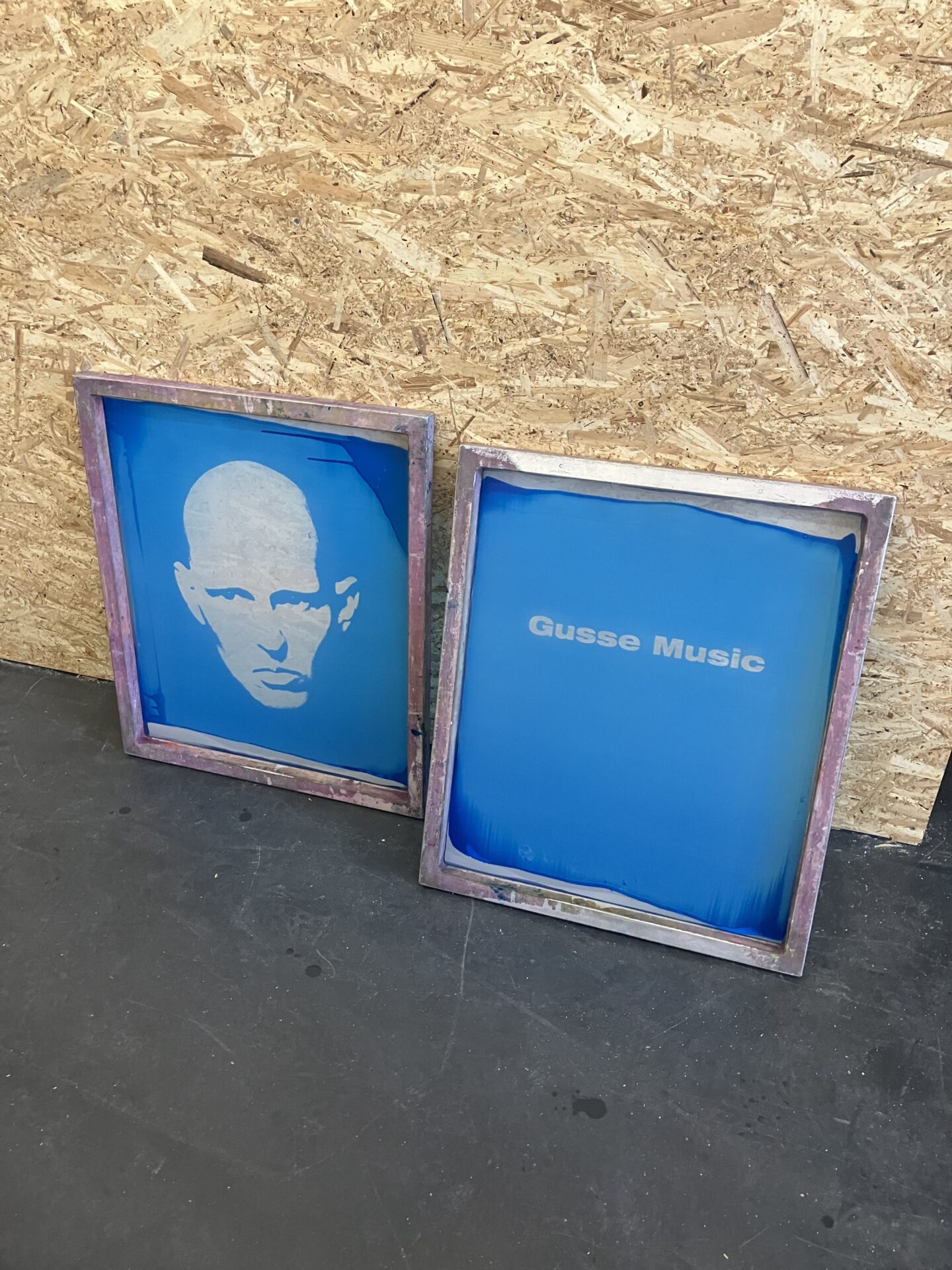
P: Yeah, I think it’s a release that feels really dynamic and alive. Gusse Music feels quite dreamy, more sample-heavy, going in loops, whilst Herzsprung is more like a jump or something.
GB: I thought of all those songs as small sculptures. Each song was a sculpture, and you’d put it in front of the audience and they could walk around it, look at it from different angles, but it wouldn’t really change. It’s a static thing — that’s kind of an analogy for the loop-based song. It’s very vertical. Things happen, you add layers, but it doesn’t really change over time. With Herzsprung, I wanted to do the opposite. I wanted to make a horizontal record that changes over time, even though it’s the same kind of vertical layers, like a four-piece band. It doesn’t change vertically, but it changes horizontally. It’s not sculptural anymore, it’s more like a playwright.
P: Yeah, that makes sense. It has a narrative, a development. I love that analogy. I also read that you recorded Herzsprung on a twenty-four-track tape recorder. Why did you do that, and how was that?
I wanted to introduce an element of risk into my recording process. The element of risk was that I booked a big studio, spent a lot of money, brought people I’d hired, and we had seven days to do it.
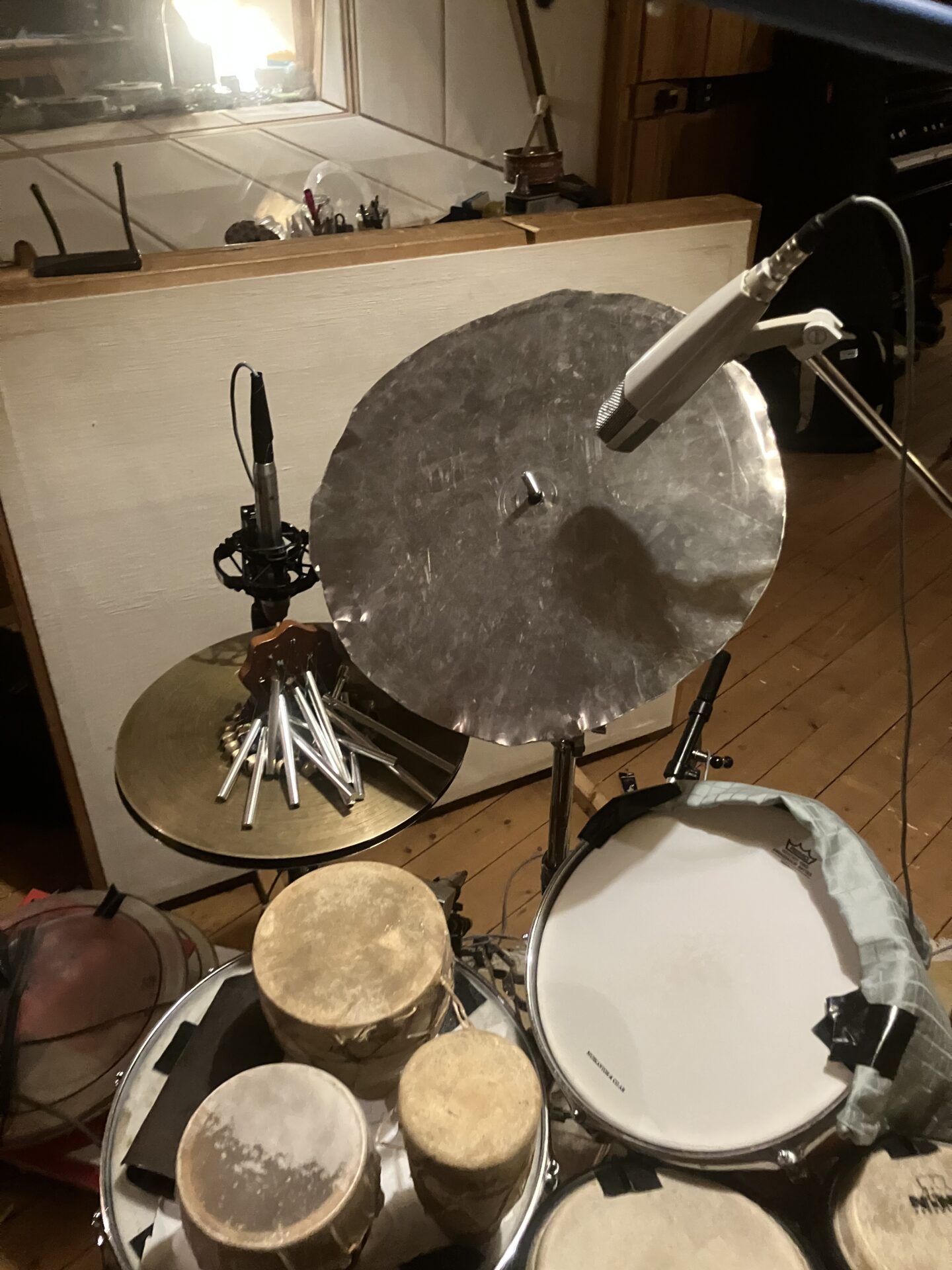
GB: I’m not really a purist about sound quality — some people are really into “digital recording is shit, we need to record analog,” I don’t really care about that. For me it’s more about the approach, the workflow. Gusse Music was a very digital album, recorded in Ableton, and for me that’s like little tiny blocks. I wanted to do the opposite with this, because when you work with tape you don’t look at a screen, it’s all on a tape machine, and that makes for a very different approach. I knew I wanted to record the album with a live band. I always want to challenge myself and learn something new, and it’s funny because recording in a live room on tape is the most conventional, conservative thing you can do. That’s how people have made records forever. But given how I grew up, with a computer and Ableton and my peers doing the same, it felt like the freshest thing to do, because everyone’s making records on their computer now, and you have total control over the music all the time. You can always go back to another version, work with tiny details, tune everything perfectly. I wanted to introduce an element of risk into my recording process. The element of risk was that I booked a big studio, spent a lot of money, brought people I’d hired, and we had seven days to do it. Everyone knew there was a lot on the line. Everyone knew we had to lock in and do this shit and leave with the album. That was an amazing experience, because you start focusing on other things, ultimately on the performance of the music rather than tiny details. It was spiritually a more fulfilling process than just being in a room with my computer.
P: How do you feel about this tour?
GB: Great, yeah, it’ll be fun. I think, you know, you release something and it’s just out there on the internet, you build up so much expectation working on an album for a year or two, and then the day it comes out it’s just online — it’s so underwhelming. Now I get to play it in front of people, and hopefully meet people who like the music, and I think it’s going to make sense to me — you can feel it, that there’s a real connection with somebody. Hopefully.
Related