Interview
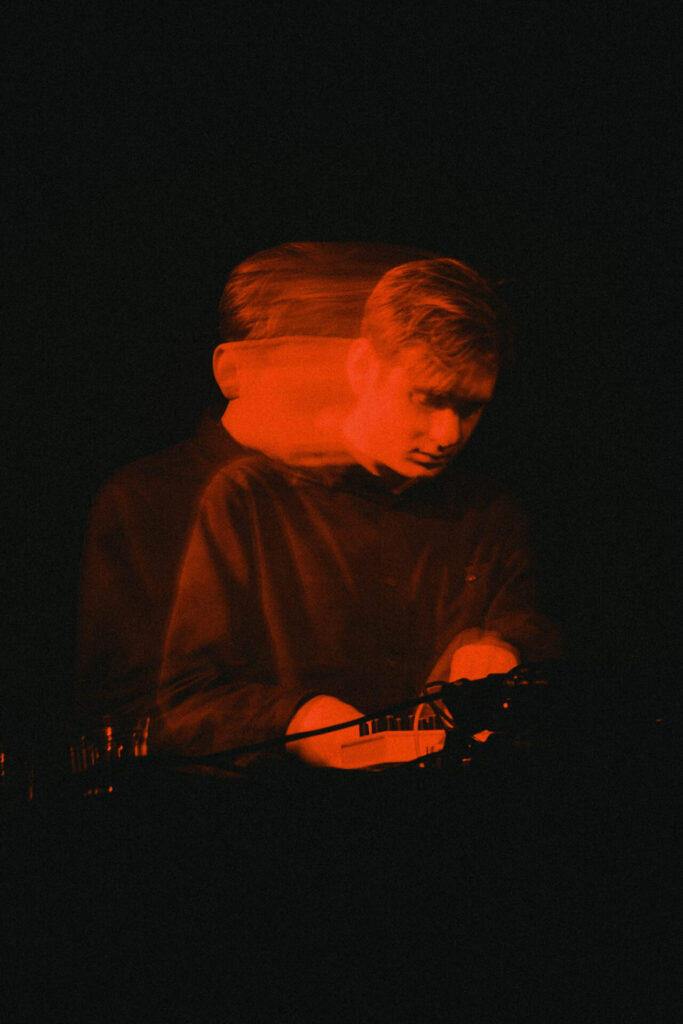
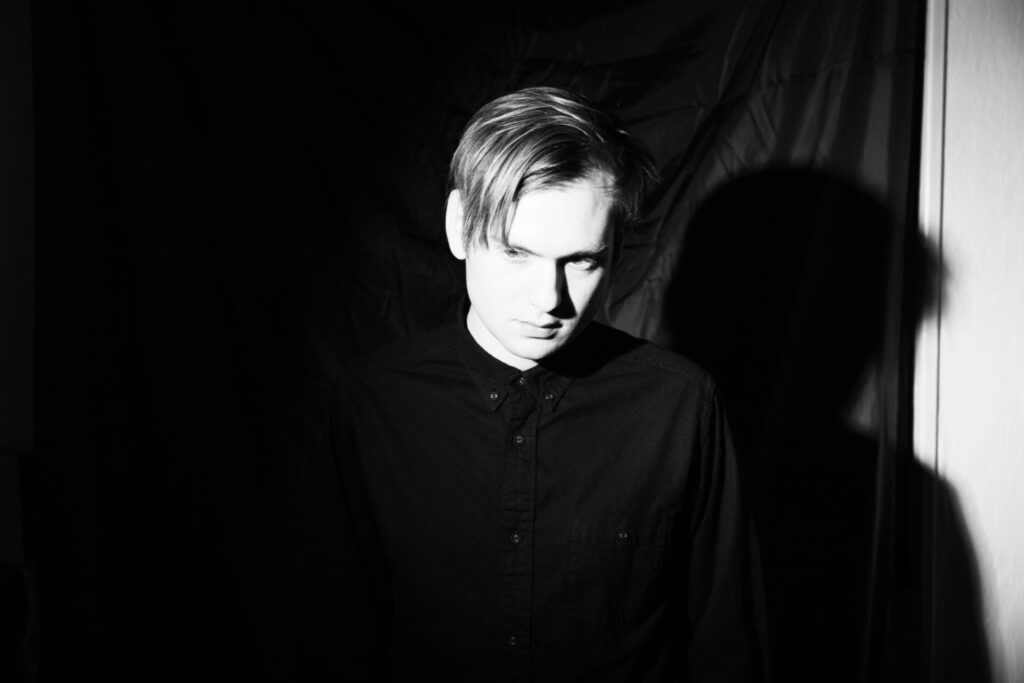
Interview with Casimir Geelhoed
By Gosia Kalisz
Part-musician, part-software developer, Casimir Geelhoed explores how the digital and the sound interact. Often delving into the themes of overstimulation and fragility, Casimir has created performances and installations for various festivals and has recently released his debut album. We invited Casimir for a discussion about his process, the intersections of coding and music-making and digital overload.
Gosia: You studied both computer science and composition. Do you find the logic of coding shapes your compositional process, or do you keep them separate?
Casimir: Coding is a part of my creative process as I sometimes write my own software effects or spatial sound tools. These processes are separate in the same way that it is a different process to build an instrument than to play an instrument. One informs the other, but they are distinct activities that require a different mindset.
I make a lot of music. It is a way of dealing with the world, like writing a diary. It has to do with those things that are hard to put into words.
I actually think that every artist working in the digital domain is influenced by the underlying logic and design principles of the software they are using, maybe more than people realise. The philosophy behind a certain software has an effect on the form of what’s been created with it. It is interesting to be aware of this and be able to work around that a bit by making your own software instruments.
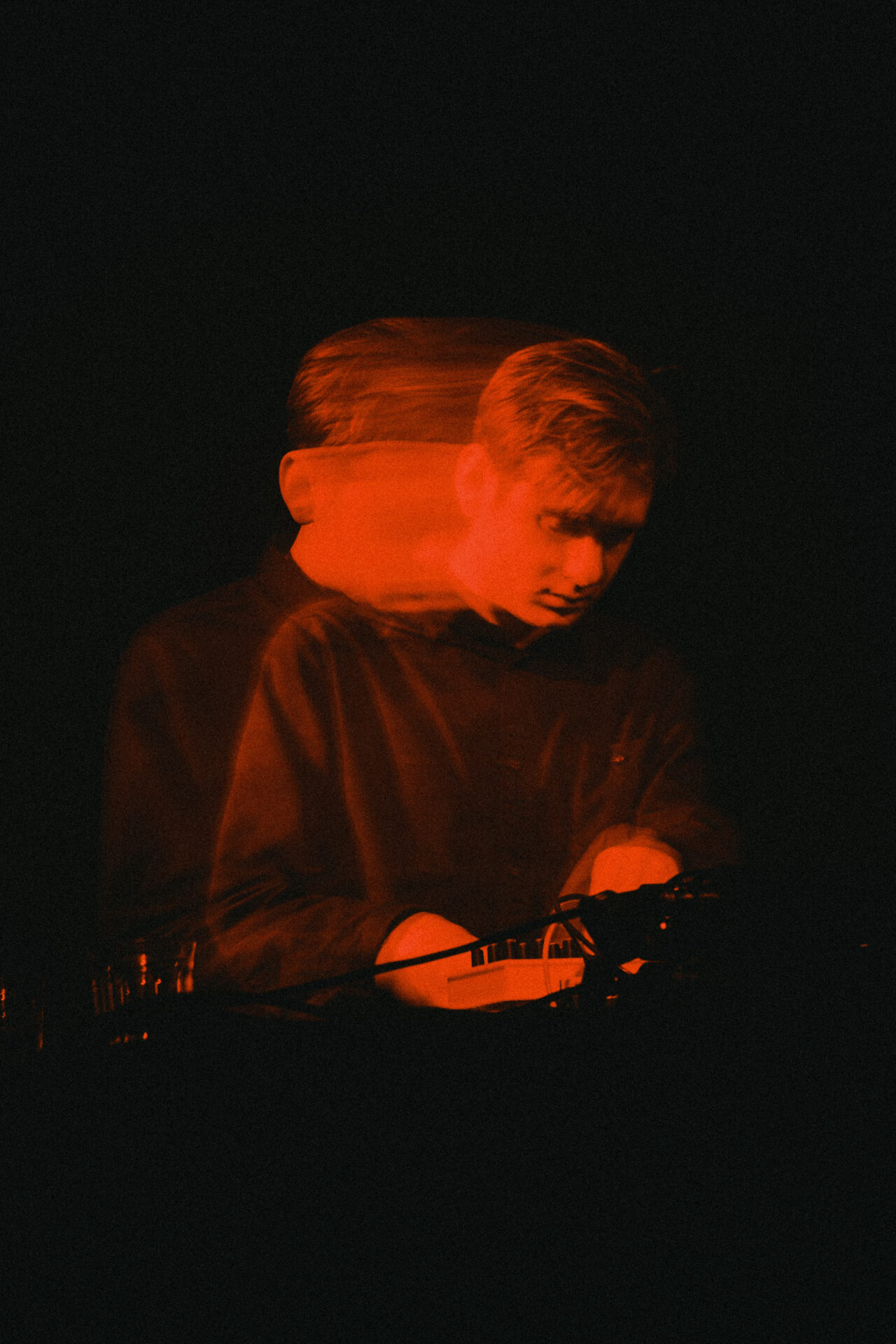
Picture by Gergely Ofner
G: Processing Music treats digital transformation as a metaphor for emotional processing, with the idea that sound can mirror the passage of time or memory. Was there a moment while working on the album when that metaphor became personal for you?
C: For me, making music is always personal. It is more than a metaphor, it is an act of processing. It is a very direct expression of feelings and ideas. I think the beauty of music, especially of really abstract music, is that a personal expression can become something more universal.
G: You often mention that you aim for your music to serve as a blank canvas for listeners to project their own emotions and associations onto. But you must have your own too. Would you like to reveal what they are and how you work around not permanently transcribing them onto your music?
C: I make a lot of music. It is a way of dealing with the world, like writing a diary. It has to do with those things that are hard to put into words. With the passage of time, with fragility, with friction and struggle.
The second track of the album, “Largo (Expansion)”, is a reinterpretation of my spatial sound piece called “the feeling of space expanding because of a person in the room”. This piece was an attempt to express a very specific form of anxiety, purely using the language of sound transformation and spatial sound.
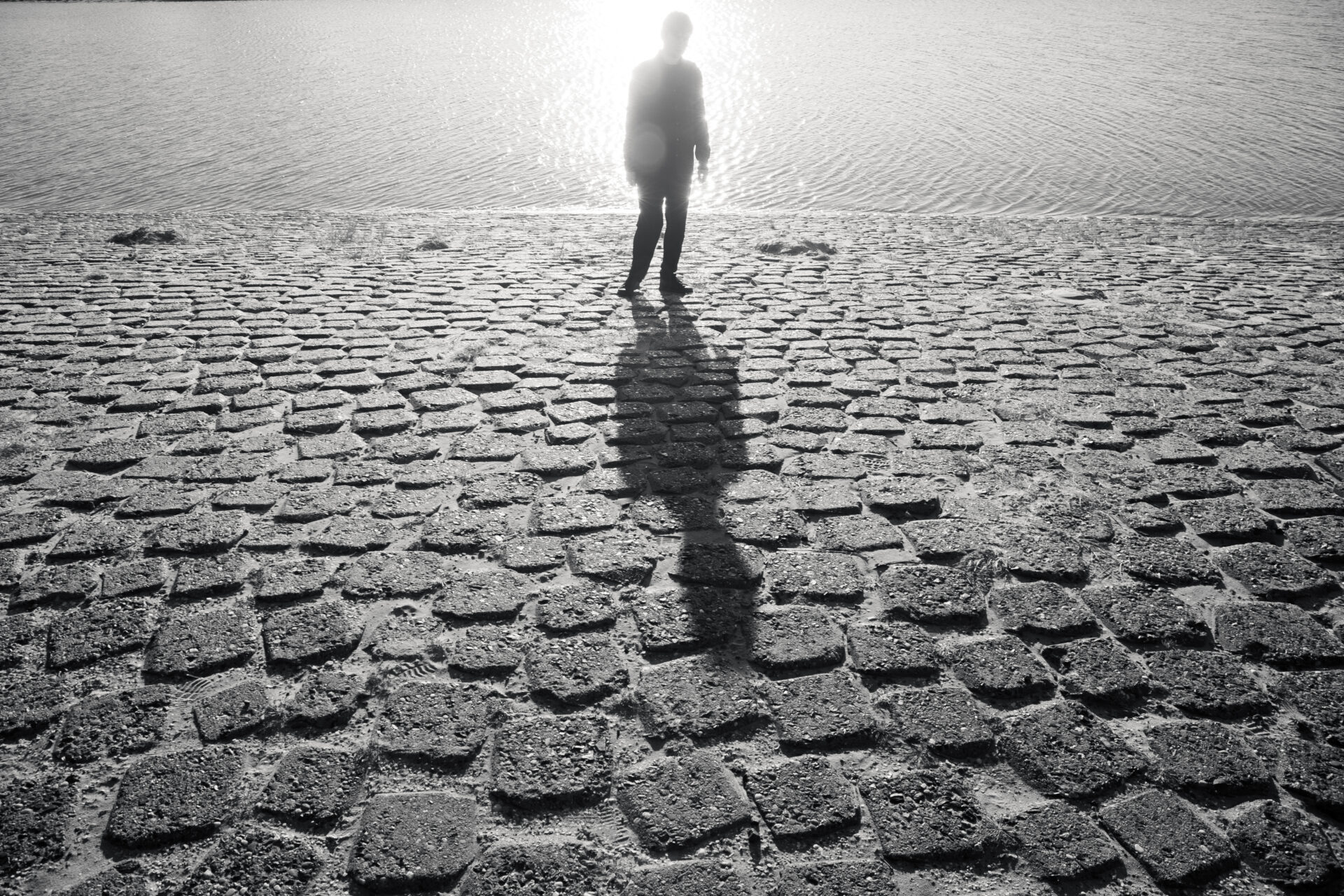
Photo by Marysia Swietlicka
G: Your performances unfold as psychological feedback loops between you and the audience – how does that dynamic change when the setting itself (a club, a gallery, a spatial installation) starts to act like another performer?
C: When possible, I develop my pieces on location, preferably in the evening or night time. I did this at Thomaskerk, Orgelpark, MONOM. Every space and sound system brings out its own technical possibilities, but also its own context and atmosphere. I try to think of compositions in a spatial way, with elements interacting with each other within the physical space. Like an abstract shadow play that we will all experience together.
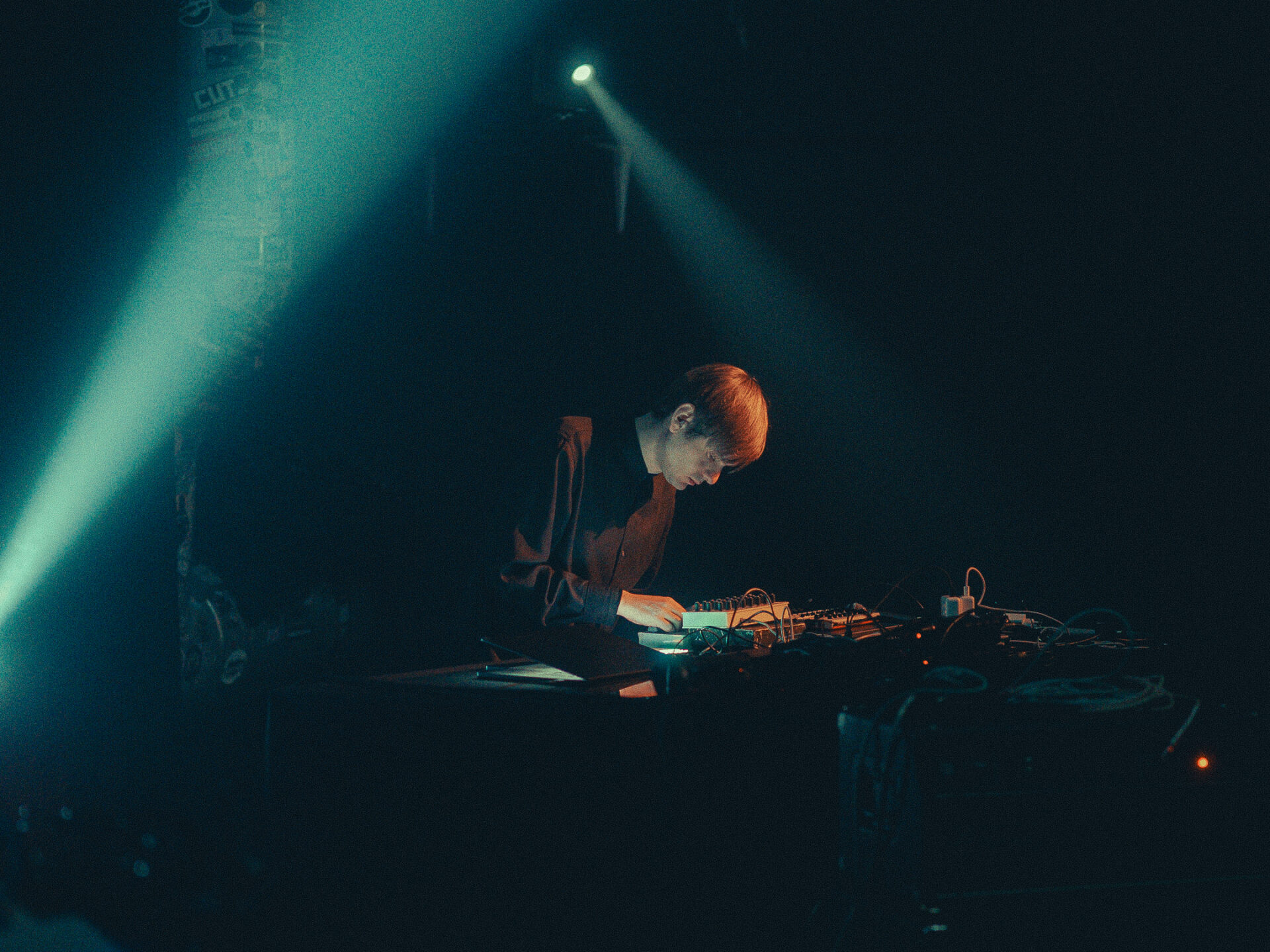
Photo by Gergely Ofner
G: You mention playing with “overstimulation” in your work. With the media bombardment around us, do you see your work more as a meditative reflection or a mirror to this digital overload?
C: I think it is more primal and essential than that. It has to do with sensory overstimulation on a perceptual level, but also probably with a desire for the sublime. I think there is a sense of cathartic submission, of truly letting go, in submerging into a big flood of noise.
What I hope for with my “Processing Music” performances is that they are like spaces in which people can ‘process’, whatever that means to them at that moment in their life. People can attach their own associations. What does it mean to you that a sound is eroding, sharpening, blurring, disintegrating, when one sound is suppressing the other, but it prevails or succumbs. It’s about a way of listening.
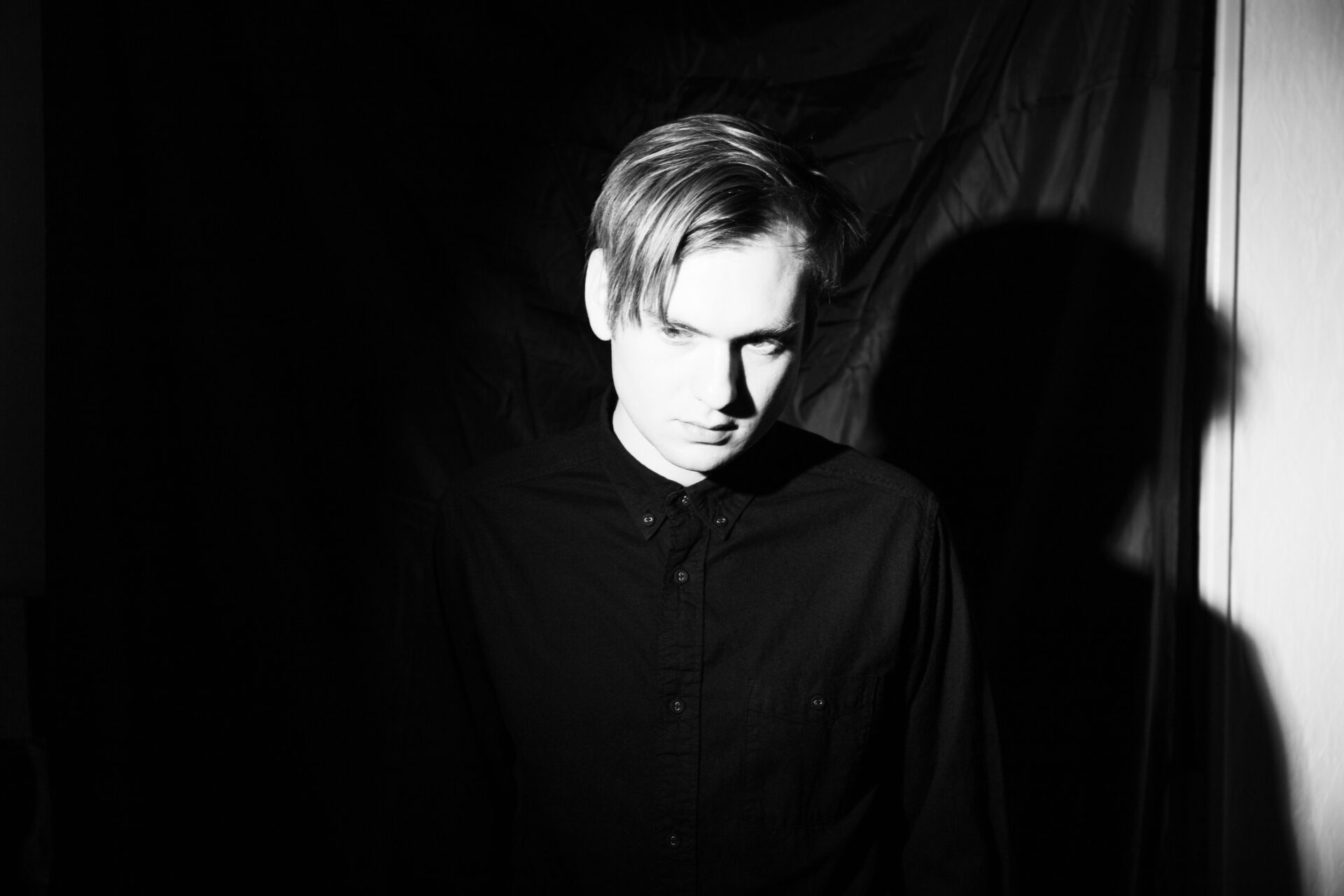
Photo by Marysia Swietlicka
G: On Processing Music, you focus on manipulating the sound until its original form disappears. What draws you to this idea of transformation?
C: With this project, I wanted to focus on transformation itself. I am often applying a certain digital process to a loop over and over, until the original has become unrecognisable and you are hearing the process itself. Different processes bring up different associations, depending on the type of process I am using. I am trying to explore the core of what makes abstract music meaningful to me. It has to do with processing emotions and the transiency of memories, with the act of listening together, oscillating between contemplation and being transported.
What to do to which sound exactly is often not really a conscious decision. To me, making music is an interplay between the conscious and subconscious, between taking control and letting go.
G: You often explore themes of fragility and control. How do you decide when the sound needs to be perfected and when broken?
C: Most of my sounds are ‘broken’. My own old music is my sample library. The sounds I use are often a sample of a sample of a sample of a track I made far in the past. For example, the opening track of the album is completely created with material taken from a piece I made in Ableton when I was around fifteen years old, which gives it an additional layer of depth and time scale to me. Every sound has its lineage with personal meanings attached to it. It’s an accumulated mass of memories.
What to do to which sound exactly is often not really a conscious decision. To me, making music is an interplay between the conscious and subconscious, between taking control and letting go.
G: Having finished a project that encapsulates constant movement, where do you think this journey has taken you?
To many beautiful moments. I am so grateful that I have been given the opportunity to play my music in so many different places, with people listening to it intently.
These are only steps on a longer path. It is a journey I plan to continue.
Related
Interview with Divide & Dissolve
Music // InterviewFuelled by sociopolitical ideologies, Divide and Dissolve create cathartic sonic experiences through hypnotic melodies and pounding percussion. Prior to their