FIBER Festival 2026 First Names Announcement
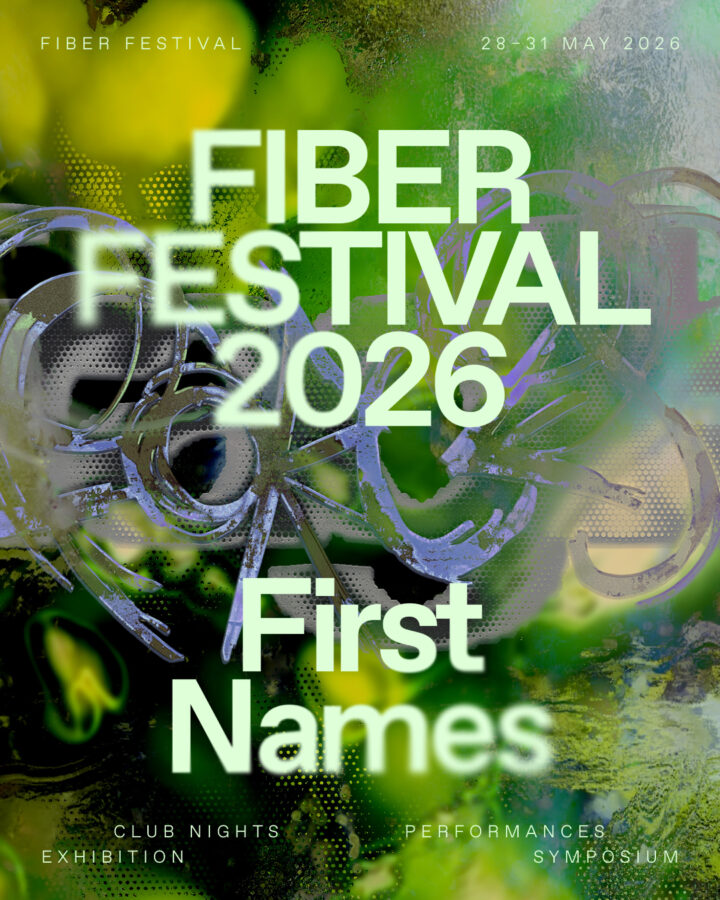
Music // RecommendedInterdisciplinary festival FIBER returns for their 11th edition on 28-31 May. This year their festival explores the theme Fragile Forces
Combining the digital and the organic, the Danish-Chilean artist Molina works with contrast between spontaneity and compliance. Her music welcomes listeners to a surrealist universe of fuzzed-out guitars, ethereal vocals, and layered samples.
Before her show on February 9th, we chatted with Molina about perfectionism, motherhood and artistic inheritance.
Gosia: You come from a family with an artistic background. You mention your parents met in art school, and your mom was painting a lot. How has your parents’ work influenced your taste and style, and in what ways do you deviate from your family’s creative practices?
Molina I definitely see that some core principles are shared. My mom has a very intuitive approach to painting, which deeply resonates with how I work.
All my work is done by ear and by what simply feels/sounds right, as I don’t understand notation or music theory at all.
G: You mentioned that going to a conservatory requires self-assurance in what you want to learn. Do you feel like that came naturally to you, or was the process of figuring out your interests more complicated?
M: No, it wasn’t natural for me at all. I came from a background where I was never taught how to play an instrument formally. But since I was a child (around 9), I loved recording whole songs with keyboard beats, keys, and vocals on tape cassettes, and I started learning Logic Pro on my own when I was 16. I entered the school coming from a background of working very much on my own, without a peer group that was also making music, so I spent the first years of my Bachelor’s degree fumbling around a bit. I did know, though, that what I love most is hands-on production and arrangement.. working with instrumentation, melodies, and sounds. I became really interested in learning more about the technical aspects of sound, like mixing and sound perception. Each year, we could choose specific elective courses, and I dedicated many hours to sound engineering and music production. This allowed me to work very hands-on and ultimately mix my own material, ensuring it was done my own way. I figured out at RMC that I’m a very intuitive worker. All my work is done by ear and by what simply feels/sounds right, as I don’t understand notation or music theory at all.
G: You finished your album two weeks before your due date. How has the pregnancy affected your bodily awareness when making music?
M: It helped me listen more closely to my own body’s signals..to slow down, rest, and recognize my limits. During this period, I felt no guilt if I wasn’t working, which is a valuable mindset I need to hold onto.
G: I Heard you made a playlist for your daughter with music she might want to check out at some point in life. Firstly, I’m curious to know what kind of music you put in there?
I started this list for Lucca when she was six months old to help her fall asleep, and over the years, I’ve kept building on it. The beginning of the list features calm songs by artists like Victor Jara ‘Gira Girasol’ and Gabriel Yared’s soundtrack from the movie Betty Blue, specifically ‘C’est le vent, Betty.’ I really love repetitive riffs that put you in a pulse-like state, and that track has the most beautiful, organic piano riff paired with a very mechanical drum machine loop halfway through. There’s also this danish artist Pia Raug’s song ‘Cirkler’ and Broadcast’s with ‘Echo’s Answer.’
A bit further down the list, there are artists like Dean Blunt’s album ‘The Redeemer’, Anna Domino ‘The Land of My Dreams’, Air ‘Talkie Walkie’, and A.C. Maria’s track called ‘One of Our Girls Has Gone Missing’.
For the first time, I don’t feel a sense of distance. I feel relieved and grounded. It means a lot that the album is living its own life now, and there is also a sense of pride because I really worked thoroughly on it.
G: What meaning do the songs carry that you find important enough to possibly influence your daughter’s taste?
I want to play music for her that feels breathable and weaving. Music with incredibly beautiful melodic progressions that can intrigue the brain. My wish is really just to make her curious about sound and melodies, so I try to expose her to music beyond just typical children’s songs. They can easily coexist, and that’s important too. I don’t want to dictate what she can’t listen to, but I really want to show her music full of details that are exciting to hear.
I also grew up with a very young mother, so the soundtrack of my childhood was mostly spacey electronic and pop music from the 80s and 90s (Kate Bush, Moby, Madonna, Enya, Royksopp, Björk, Massive Attack). So there was this balance between something catchy and more abstract, that I find myself working with today. I am sure that the music I grew up with shaped my curiosity. But I also found my own way, leaning more into the worlds of post-punk and shoegaze-scenes that my mom didn’t know.
G: You mention considering quitting music at times, and it being related to perfectionist tendencies. What does perfectionism actually sabotage in your work, and how did you work to overcome that?
I think my perfectionism sometimes sabotages the courage to take risks. It made me hold back in a way that sometimes left me paralyzed in the creative process. What helped me overcome that feeling for my last album was just saying out loud that I had to allow the intuitive recordings to simply breathe as they were, and then making a conscious decision to leave them untouched.
Now that the album exists independently of you, circulating and being listened to, do you feel relief, distance or a new sort of attachment to it?
For the first time, I don’t feel a sense of distance. I feel relieved and grounded. It means a lot that the album is living its own life now, and there is also a sense of pride because I really worked thoroughly on it.
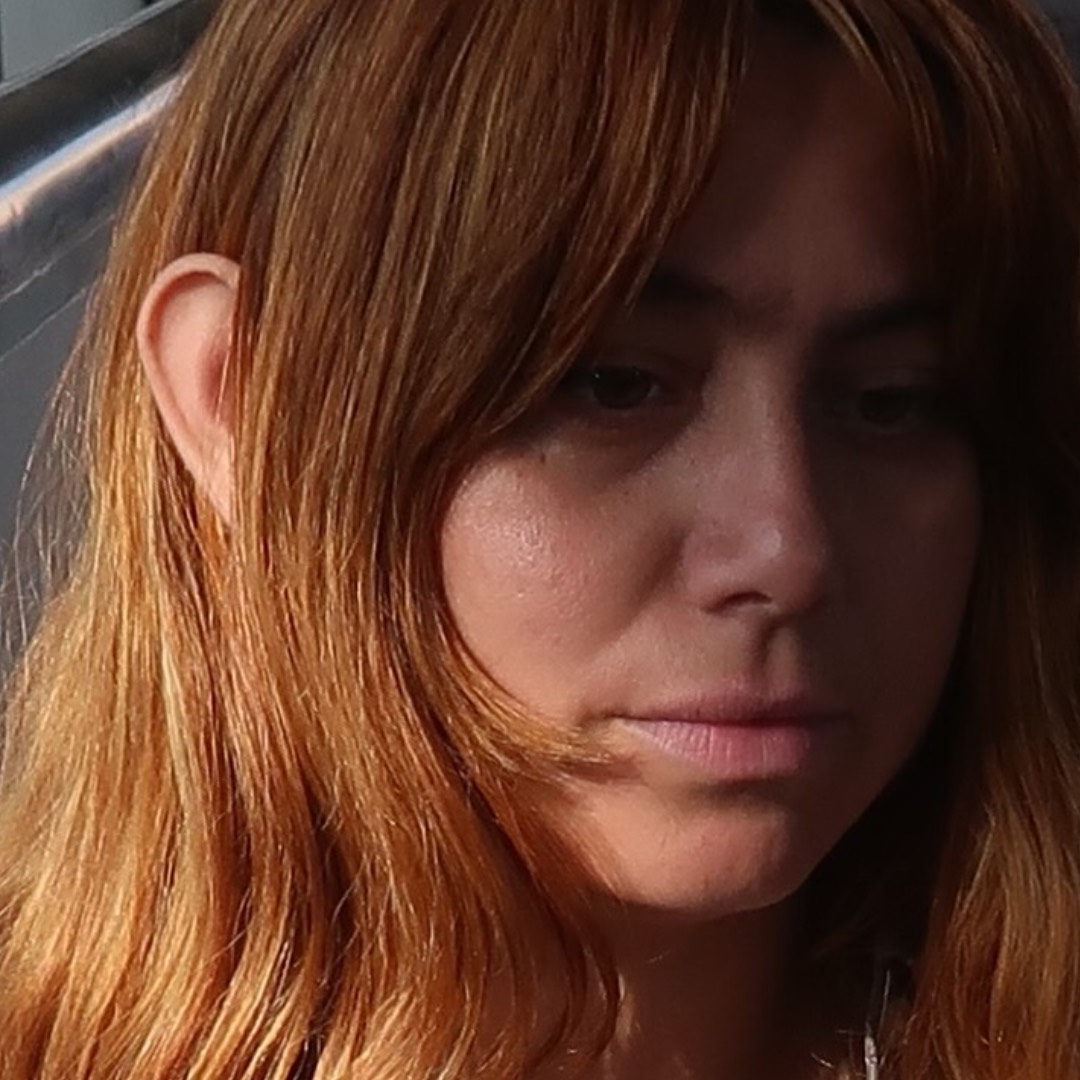
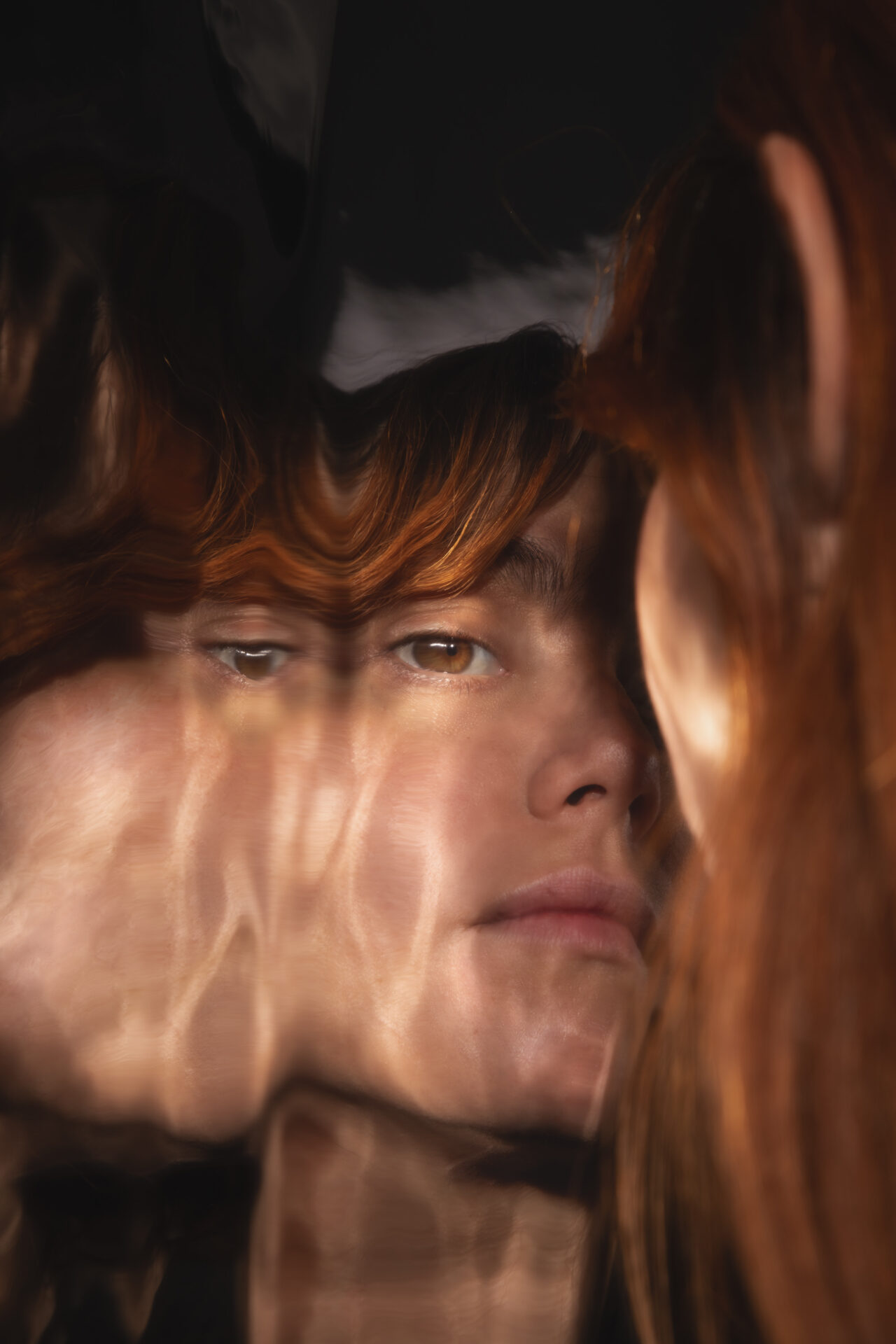
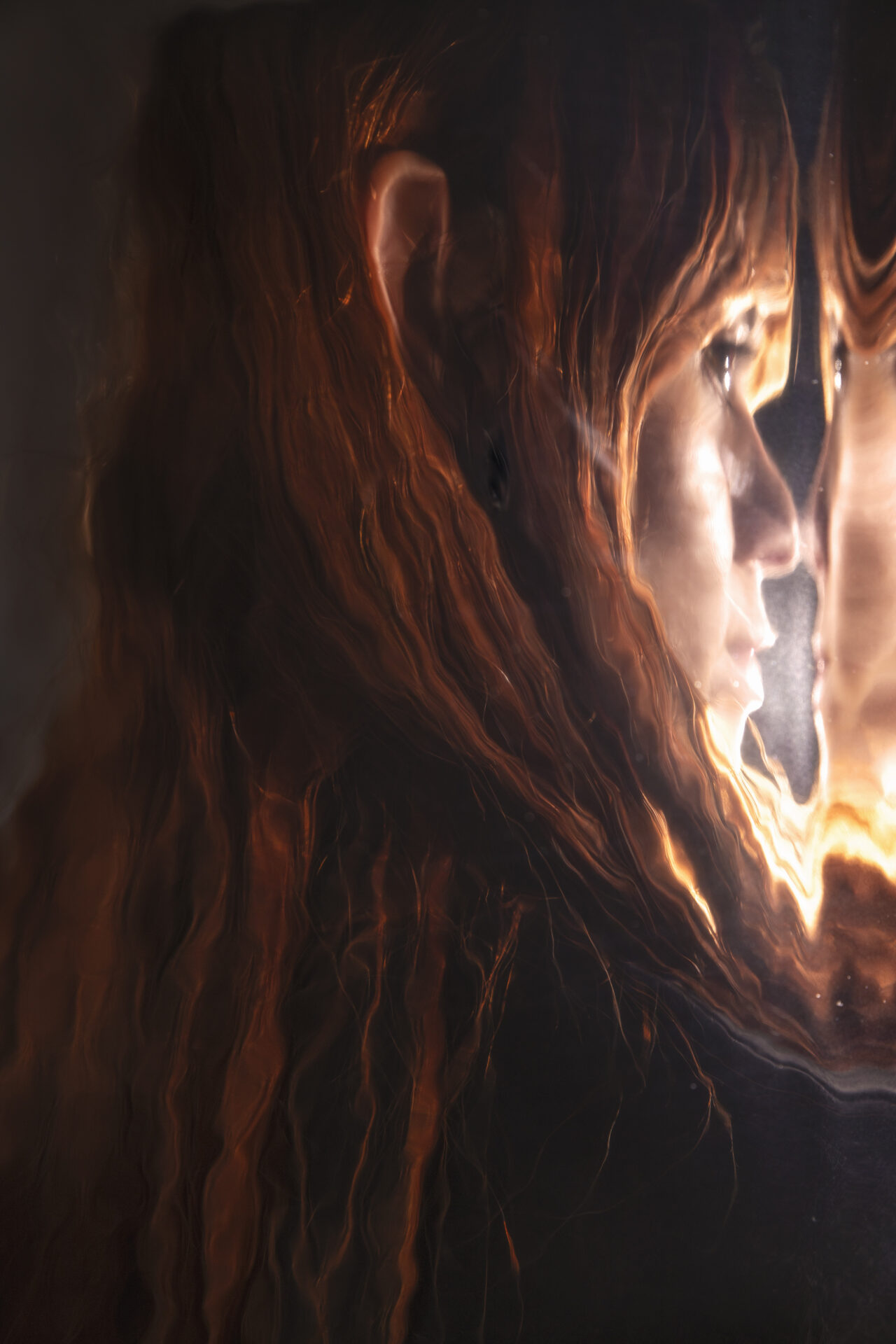
All images courtesy of Molina
What currently feels unresolved or still forming in your relationship to music?
I still struggle at times with finding peace in my own thoughts regarding my music. I often reach a point in the creative process where I lose the intuitive spark that I thrive on, and calculating thoughts start creeping in, like: Where does this fit? Does it match my artistic expression? I don’t work well with a strict, pre-determined plan for the final outcome. I actually thrive on ‘structured chaos,’ where I don’t need to know the end result, but can work intuitively with elements like form, sounds, and melodies within a kind of framework. So, there is a constant clash between doing exactly what I want in the moment and the need to be focused enough to actually finish my ideas without overthinking them. My last album from 2024 felt like coming a bit more home. It felt like a step toward finding my place in what feels right, and I think that was because I had a good creative process.
Catch Molina perform at Cinetol on the 9th of February.
Interdisciplinary festival FIBER returns for their 11th edition on 28-31 May. This year their festival explores the theme Fragile Forces